

- Home
- About Us
About Us
- Product
Product
- Cases
Cases
- R&D Technology
- News
News
- Contact Us


- Default Language
 EN
EN RU
RU ES
ES DE
DE EL
EL IT
IT JA
JA KO
KO PT
PT ID
ID SR
SR UK
UK VI
VI TH
TH TR
TR MS
MS BE
BE AR
AR
Integrated Sewage Treatment Equipment: An Innovative Solution to Effectively Solve Sewage Treatment Problems
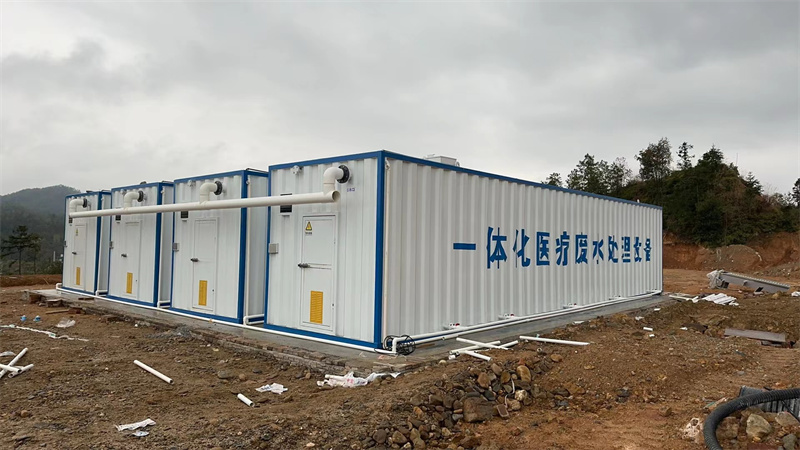
Against the backdrop of growing environmental pressure and continuously tightening sewage discharge standards, traditional sewage treatment plants are hampered by large land occupation, long construction cycles and complicated operation, making them unsuitable for small and medium-sized sewage discharge projects. As an integrated and intelligent innovative solution, integrated sewage treatment equipment features one-stop pollution control. It has gradually become the preferred option for township domestic sewage, industrial park wastewater, rural decentralized sewage and other scenarios, delivering an efficient, energy-saving and convenient new approach for water pollution remediation.
I. Definition and Technical Characteristics of Integrated Sewage Treatment Equipment
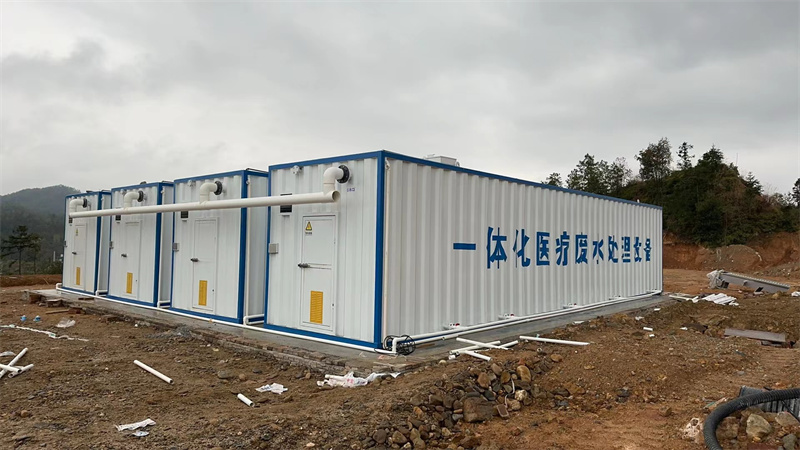
Integrated sewage treatment equipment integrates all core treatment units including bar screening, equalization tank, biochemical reaction, sedimentation, filtration and disinfection into one or a set of sealed units through modular design. It realizes fully automatic operation covering the whole process from raw water intake to compliant discharge. Compared with conventional sewage plants, it has three prominent technical features:
Integrated Layout: Abandon the separate construction model of traditional processes. Pre-treatment, biochemical treatment and advanced treatment are highly condensed. The land footprint is only 1/3 to 1/5 of conventional facilities, which perfectly fits towns, villages and industrial parks with limited land resources.
Automatic Operation: Equipped with a PLC control system and online monitoring modules. The system tracks real-time water quality, dissolved oxygen, pH value and other parameters, and automatically adjusts aeration and reflux. Manual intervention is minimized, and only regular patrol inspections are required, cutting O&M costs by more than 30%.
Prefabricated Manufacturing: All core components such as bioreactors, membrane modules and disinfection devices are assembled and tested in the factory. On-site work only includes pipeline connection and power commissioning. The whole construction period is shortened to 15-30 days, far shorter than the 3-6 months required for conventional sewage plants.
II. Core Advantages: Why Integrated Sewage Treatment Equipment Has Become the New Mainstream
In practical projects, integrated equipment stands out not only for its fast-track construction and easy operation, but also for its high treatment efficiency, stable environmental compliance and strong adaptability. Its four major values are summarized as follows:
1. High Treatment Efficiency and Stable Compliance
With modular process combination, customized biochemical schemes can be formulated for different types of sewage such as domestic sewage, industrial wastewater and breeding wastewater. For domestic sewage, the combined A/O biological contact oxidation + MBR membrane separation process achieves over 90% COD removal and more than 85% ammonia nitrogen removal. The effluent steadily meets Grade A criteria specified in GB18918-2002 Pollutant Discharge Standard for Urban Sewage Treatment Plants. For low-concentration industrial wastewater from food processing and electroplating industries, pre-treatment units (bar screens, demulsifiers) paired with advanced treatment (activated carbon adsorption, UV disinfection) effectively remove suspended solids, organic contaminants and heavy metals to satisfy industrial discharge standards.
2. Low Energy Consumption and Controllable Operating Cost
Conventional sewage plants require separate aerators, agitators and lift pumps for individual units, leading to high power consumption. Integrated equipment optimizes the process flow and adopts energy-saving Roots blowers and variable-frequency lift pumps. Combined with biological nitrogen and phosphorus removal to reduce chemical dosage, the operating cost is controlled within 0.8-1.5 RMB per ton of water, 20%-40% lower than traditional facilities, bringing remarkable long-term economic benefits.
3. Strong Adaptability with Wide Application Coverage
The equipment can flexibly accommodate projects of different scales and water quality conditions:
Townships & Rural Areas: Buried installation saves above-ground space. It is resistant to hydraulic shock loads. Even if influent COD surges temporarily to 800mg/L, the system can maintain stable operation despite fluctuating water volume of decentralized rural sewage.
Industrial Parks: Custom integrated schemes consisting of pre-treatment, biochemical treatment and advanced treatment are available for small and medium manufacturers engaged in machinery, textile printing and dyeing. The daily treatment capacity ranges from 5m³ to 500m³ to meet on-site treatment and compliant discharge requirements.
Emergency Projects: Mobile integrated units can be rapidly deployed for municipal pipeline maintenance and flood-induced sewage overflow to prevent pollution spread.
4. Simple O&M with Low Management Threshold
Conventional sewage plants need professional teams for daily operation and maintenance. In contrast, integrated equipment supports remote monitoring via mobile APPs. Operators can check running status, water quality data and fault alerts in real time. No professional environmental expertise is needed; staff only need short-term training to finish regular maintenance including membrane cleaning and chemical replenishment. It greatly lowers the management barrier for small towns and villages.
III. Technical Composition: Five Major Systems Covering Hardware and Software
Stable operation relies on coordinated hardware modules and intelligent software systems, which are composed of five subsystems:
1. Pre-treatment System
As the first barrier, it mainly consists of bar screens, equalization tanks and lift pumps:
Fine Mechanical Bar Screens (2-5mm gap): Automatically intercept suspended solids such as vegetable residues, fibers and sediment to avoid pipeline blockage.
Equalization Tank: Stabilizes water volume and homogenizes water quality to buffer shock loads on biochemical reactors.
Submersible Sewage Pumps: Deliver pre-treated sewage to biochemical units with stable flow.
2. Biochemical Reaction System
This is the core treatment unit that degrades organic pollutants through microbial metabolism. Common processes include:
A/O (Anoxic/Oxic) Process: Suitable for domestic sewage and low-strength industrial wastewater. It realizes denitrification in anoxic tanks and nitrification and phosphorus removal in oxic tanks to eliminate organics, nitrogen and phosphorus simultaneously.
MBR (Membrane Bioreactor): Combines biological treatment with membrane separation. Membrane modules retain high-concentration activated sludge to strengthen pollutant removal. The high-quality effluent can be directly reused for irrigation and road flushing.
SBR (Sequencing Batch Reactor): Ideal for intermittent discharge from small factories and centralized rural sewage. The cyclic operation of feeding, aeration, sedimentation and draining simplifies the structure and reduces land occupation.
3. Advanced Treatment System
Further remove residual pollutants after biochemical treatment to guarantee compliance:
Sedimentation Tank & Sand Filter: Eliminate surplus sludge and suspended solids to lower effluent turbidity.
Disinfection Device: UV or sodium hypochlorite disinfection kills bacteria and viruses to meet sanitary standards.
Optional Desalination Units: Reverse osmosis (RO) or nanofiltration (NF) membranes can be added for water reuse projects to remove salts and soluble organics and realize water recycling.
4. Automatic Control System
The core for unattended operation, including PLC controllers, sensors, actuators and remote monitoring modules:
PLC Controller (Equipment Brain): Automatically adjusts aeration intensity, reflux ratio and chemical dosage according to real-time COD, ammonia nitrogen and dissolved oxygen data collected by sensors.
Sensors: Continuously monitor flow rate, pH, DO and sludge concentration and transmit data to the controller and cloud platform.
Remote Communication Module: Supports 4G/5G and Ethernet transmission. Operators view data and receive fault alarms via computers or mobile phones to realize remote management.
5. Auxiliary System
It includes aeration system, chemical dosing system and sludge treatment system to secure stable operation:
Aeration System: Microporous aeration discs and hoses supply oxygen for microbial respiration. Energy-saving blowers automatically adjust air volume based on DO readings to cut power consumption.
Chemical Dosing System: Automatically add flocculants and disinfectants with precise dosage control to avoid waste.
Sludge Treatment System: Sludge thickeners or screw dewatering machines reduce the moisture content of excess sludge below 80%, facilitating transportation, landfilling or composting for resource recovery.
IV. Purchase Guidelines: Avoid Pitfalls and Select Suitable Integrated Equipment
Buyers shall select equipment strictly based on sewage characteristics, treatment capacity, discharge standards and budget. Four key points are listed below:
1. Confirm Water Quality and Discharge Standards to Customize Process
Pollutant compositions vary greatly among domestic sewage, industrial wastewater and breeding effluent. First conduct water quality testing to measure COD, ammonia nitrogen, total phosphorus and SS, then select corresponding processes in accordance with local discharge limits. For example, an oil interception unit must be added for catering wastewater, while chelating precipitation is required for heavy metal-containing industrial wastewater to prevent non-compliance caused by mismatched processes.
2. Match Equipment Model with Actual Treatment Scale
The daily capacity ranges from 1m³ to 1000m³. Select models according to average and peak water discharge. A 10-20m³/day unit works for centralized rural sewage covering 50-100 households, and a 50m³/day unit fits small factories with 50 tons of daily wastewater. Oversized equipment leads to unnecessary energy waste, while undersized units result in insufficient treatment capacity.
3. Inspect Material and Core Component Quality
Material directly determines service life and stability:
Main Structure: Carbon steel with epoxy coal tar anti-corrosion coating or stainless steel is preferred for long-term immersion in sewage.
Key Parts: Choose well-known brands for aeration blowers, MBR membranes and water pumps (e.g. Grundfos pumps, Mitsubishi Chemical membranes) to reduce breakdown and maintenance costs.
4. Verify Manufacturer Qualifications and After-Sales Service
Select manufacturers with environmental product certification and ISO9001 quality management certification. Evaluate after-sales capacity including on-site installation & commissioning, operator training, 1-2 year warranty and lifelong technical support to avoid operational troubles caused by poor post-service.
V. Conclusion: Integrated Equipment Boosts High-Efficiency Sewage Governance
Driven by the dual-carbon goals and rural revitalization strategy, the industry is shifting from large-scale centralized treatment to decentralized high-efficiency remediation. Integrated sewage treatment equipment, with the merits of compact layout, automatic operation and low cost, has become a key solution for small and medium-sized pollution control projects. With continuous advances in membrane technology and intelligent control, integrated equipment will develop toward low energy consumption, resource recycling and digital intelligence. It will deliver greener and more efficient water treatment solutions for towns, villages and industrial parks, and support the continuous improvement of China’s aquatic ecological environment.
Related Products
Related News
- New Trends in the Development of the MBR Membrane Wastewater Treatment Industry: A Professional Guide to Selecting Source Manufacturers
- How to Select Wastewater Treatment Equipment for Pig Farms? In-depth Review of Trusted Industry Service Providers
- Hard-to-Treat Slaughterhouse Wastewater? Tested & Recommended High-Adaptability Wastewater Treatment Solutions for 2026
- How to Select Integrated Wastewater Treatment Equipment? In-depth Review of Trustworthy Source Manufacturers Recognized by Industry Insiders
- How to Select Buried Integrated Wastewater Treatment Equipment? Strength Evaluation of Reliable Brands in 2026
- Inventory of New Coal Mine Water Treatment Technologies! How to Select Cost-Effective Manufacturers & Avoid Common Pitfalls
- Textile Printing & Dyeing Wastewater Treatment Is Tough? These Four Powerful Enterprises Easily Solve Core Industry Pain Points
- Authoritative Evaluation of High-Salinity Wastewater Treatment Equipment | Top Recommended Brands of 2026
- Which Supplier Offers Reliable Integrated Sewage Treatment Equipment? Multi-dimensional Actual Test Comparison & Top Recommended Brands Released
- Electroplating Factory Wastewater Treatment Engineering Cases
About Us
products
Business
News
Contact Us
Service Hotline:+86-15253659088WhatsApp: +86 18706508001
Email: jly@haipuou.group
Address: No.56, Donghuan Road, Zhucheng City, Weifang City, Shandong Province, China